
Navigating the Future: Global Consumer Electronics Trends, IoT, and AI-Driven Disruptions in the Digital Age
Introduction
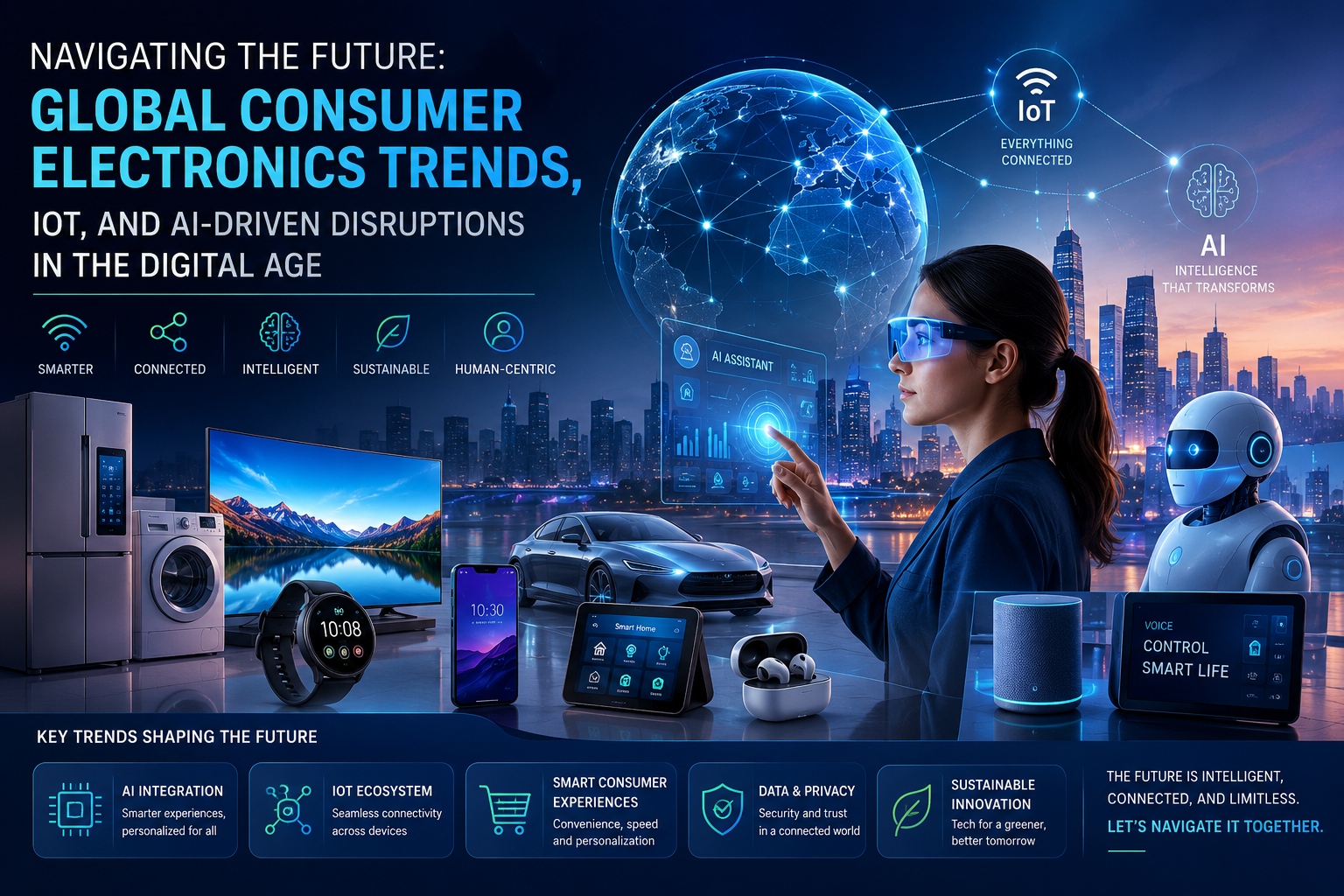
The consumer electronics industry is undergoing a seismic shift as emerging technologies redefine how people interact with devices. The integration of Artificial Intelligence (AI) and the Internet of Things (IoT) is revolutionizing the landscape, fostering unprecedented levels of automation, personalization, and connectivity. As we navigate the digital age, business leaders must embrace these disruptions, leveraging cutting-edge innovations to stay ahead of the curve. This article explores the key trends shaping the industry, the growing influence of IoT and AI, and strategic insights for thriving in this transformative era.
The Evolution of Consumer Electronics: A Glimpse into the Future
Over the past decade, the consumer electronics sector has evolved beyond standalone gadgets to a deeply interconnected ecosystem of smart devices. From AI-powered assistants and smart wearables to autonomous vehicles and immersive augmented reality (AR) experiences, the industry is witnessing a paradigm shift.
Key factors fueling this evolution include:
- The proliferation of 5G technology, enabling ultra-fast data transmission and real-time interactions.
- The rise of edge computing, reducing latency and enhancing device responsiveness.
- Growing consumer demand for seamless digital experiences, driving the need for intuitive and interconnected devices.
- Sustainability concerns, pushing manufacturers toward eco-friendly innovations, such as biodegradable electronics and energy-efficient processors.
With these dynamics in play, companies must rethink product design, data security, and customer engagement strategies to remain competitive in the fast-evolving market.
The Rise of IoT: The Power of a Connected World
The Internet of Things (IoT) is reshaping consumer behavior, creating a seamlessly connected environment where devices communicate and operate autonomously. IoT-enabled smart homes, healthcare wearables, and industrial automation are just the tip of the iceberg.
Key IoT Trends Driving Transformation
- Smart Homes and IoT-Enabled Living
- The adoption of smart home devices, from voice-controlled assistants like Amazon Alexa to IoT-powered security systems, is skyrocketing. AI-driven automation enhances user convenience by learning behavioral patterns and optimizing energy consumption, security, and overall efficiency.
- Healthcare Innovations and Wearables
- IoT-powered healthcare devices, such as continuous glucose monitors and remote patient monitoring tools, are revolutionizing the medical field. AI algorithms analyze real-time health data, enabling predictive diagnostics and personalized treatments.
- Autonomous Vehicles and Smart Transportation
- The fusion of AI and IoT in autonomous vehicles is reducing accidents, optimizing traffic, and improving fuel efficiency. Smart city initiatives further amplify these benefits, integrating IoT-powered traffic management systems and intelligent public transportation.
- Industrial IoT (IIoT) and Smart Manufacturing
- Factories are leveraging IoT-enabled predictive maintenance, robotics, and AI-powered automation to enhance production efficiency. IIoT streamlines supply chain operations, minimizes downtime, and enhances workplace safety.
AI-Driven Disruptions: Reshaping the Future of Consumer Electronics
Artificial Intelligence is a game-changer in consumer electronics, fueling innovation across various domains. As AI becomes more sophisticated, its impact extends beyond simple automation, enabling devices to learn, adapt, and make intelligent decisions.
AI Innovations Transforming Consumer Electronics
- AI-Powered Personal Assistants
- Virtual assistants like Google Assistant and Apple's Siri are evolving with advanced natural language processing (NLP), offering hyper-personalized interactions, real-time translations, and predictive recommendations.
- Generative AI in Content Creation
- AI-driven tools such as OpenAI’s ChatGPT and DALL·E are revolutionizing content creation, allowing consumers to generate text, images, and videos with unprecedented ease. The rise of AI-generated media is reshaping digital storytelling, marketing, and creative industries.
- AI in Gaming and Entertainment
- AI-powered game engines are creating hyper-realistic characters and adaptive gaming experiences. AI-generated scripts, voice synthesis, and deep-learning-based content recommendations are enhancing user engagement in streaming services.
- AI in Consumer Electronics Security
- As cyber threats escalate, AI-driven security solutions offer real-time threat detection, biometric authentication, and anomaly detection in smart devices. Machine learning algorithms continuously analyze patterns to identify and mitigate potential breaches.
Challenges and Ethical Considerations in AI and IoT Adoption
While AI and IoT offer immense potential, their adoption is not without challenges.
- Data Privacy Concerns: With interconnected devices collecting vast amounts of user data, concerns about data security and ethical AI usage are paramount. Striking a balance between personalization and privacy remains a significant challenge.
- Cybersecurity Threats: The expansion of IoT ecosystems increases vulnerabilities, requiring robust encryption, multi-factor authentication, and AI-driven threat detection.
- Ethical AI and Bias: AI algorithms must be trained on diverse datasets to eliminate biases and ensure fair decision-making in applications such as recruitment, credit scoring, and facial recognition.
- Sustainability and E-Waste: The rapid turnover of electronic devices contributes to e-waste challenges. Companies must focus on sustainable materials, modular designs, and recycling initiatives to minimize environmental impact.
Strategic Insights for Business Leaders
To thrive in this era of rapid technological disruption, business leaders must adopt a forward-thinking approach. Key strategies include:
- Investing in AI and IoT-Driven Innovation: Businesses should integrate AI and IoT into product development to enhance efficiency, personalization, and user engagement.
- Enhancing Data Security Measures: Implementing robust cybersecurity protocols ensures consumer trust and regulatory compliance.
- Focusing on Sustainability: Eco-friendly product designs, energy-efficient devices, and circular economy principles should be prioritized to address environmental concerns.
- Leveraging Predictive Analytics: Data-driven decision-making enhances market forecasting, customer insights, and operational efficiency.
- Embracing 5G and Edge Computing: The adoption of 5G networks and edge computing enables real-time interactions and improves device performance.
Conclusion: The Future Beckons
The consumer electronics industry stands at the crossroads of innovation, with AI and IoT paving the way for a smarter, more connected world. While challenges persist, the opportunities for growth and transformation are immense. By staying agile, embracing emerging technologies, and prioritizing security and sustainability, businesses can navigate the digital age successfully. The future of consumer electronics is not just about devices—it’s about an intelligent ecosystem that enhances human experiences like never before. The time to adapt and innovate is now.